
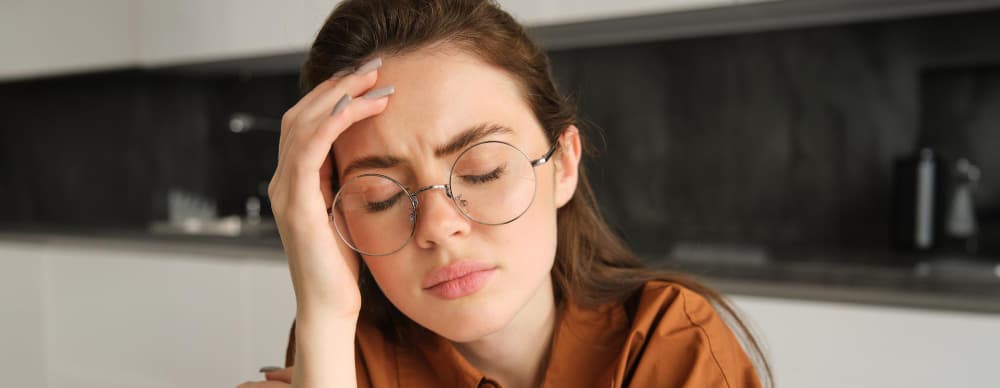
If your child frequently complains of headaches after school, rubs their eyes during homework, or suddenly loses interest in reading after just ten minutes, you might assume they are simply tired or bored. However, these are classic symptoms of a physical condition that quietly undermines academic success: pediatric eye fatigue.
In today’s digital classroom, children’s eyes are under unprecedented stress. From staring at Chromebooks and smartboards to reading textbooks, the demand for sustained near-point focus is immense. When the eyes tire, the brain tires, turning learning into an exhausting chore.
To fully understand the broad spectrum of how visual health impacts a child, we highly recommend reading our foundational guide on [Internal Link: How Vision Problems Affect Learning, Reading, and Daily Life in Children]. However, in this article, we will focus specifically on the node of visual fatigue what causes it, how it mimics attention disorders, and what parents can do to protect their child’s academic future.
What Causes Eye Fatigue in Children?
To understand pediatric eye fatigue (known clinically as asthenopia), we must look at the entities within the visual system. Vision is an active, muscular process.
Why do a child’s eyes get tired while reading or using screens? When a child looks at something close up, such as a tablet or a book, the tiny ciliary muscles inside the eyes must contract to maintain clear focus (a process called accommodation). Simultaneously, the muscles on the outside of the eyes must turn inward to keep the eyes aligned (a process called convergence).
When a child holds this focused, converged posture for prolonged periods, these muscles become strained. This muscle exhaustion leads to digital eye strain, blurred vision, and physical discomfort. The stress is compounded by digital screens, which emit high-energy blue light and cause children to blink up to 60% less frequently, leading to severe dry eye and further irritation.
The 20/20 Trap: Why Eye Fatigue is Mistaken for Attention Issues
One of the most frustrating ties between eye fatigue and academic struggle is how often it is misdiagnosed.
Many parents take their struggling child to a pediatrician or a school nurse for a standard vision screening. The child reads the letters on the Snellen eye chart from 20 feet away, passes the test, and is told they have perfect vision. Yet, they still cannot concentrate on their homework.
Can a child have eye fatigue if they have 20/20 vision? Absolutely. Standard vision screenings only test visual acuity at a distance. They do not test visual stamina, eye teaming, or how long a child can comfortably sustain focus on a book just 14 inches from their face. The physical strain required to force their eyes to work together drains their cognitive energy. As a result, they fidget, look away, act out, or refuse to complete their work.
Because the behavioral symptoms of visual fatigue distractibility, short attention span, and frustration are nearly identical to Attention-Deficit/Hyperactivity Disorder (ADHD), visual issues are frequently overlooked.
To learn more about the critical difference between eyesight and visual processing, read our related article: [Internal Link: Why Some Children Struggle to Focus Despite Normal Vision].
Spotting the Red Flags: When Tired Eyes Hurt Grades
Children rarely vocalize eye fatigue. They don’t possess the vocabulary to say, “My ciliary muscles are spasming,” or “I am experiencing convergence insufficiency.” Furthermore, because they have always seen the world this way, they assume everyone’s eyes hurt when they read.
Therefore, parents and educators must rely on behavioral observation. Establishing trust in your own observations is the first step toward helping your child.
What are the common symptoms of eye fatigue in students?
- Frequent Eye Rubbing: Attempting to physically relieve muscle strain or soothe dry eyes caused by reduced blink rates.
- Frontal Headaches: Complaining of pain in the forehead or temples, particularly after reading or screen time.
- Avoidance Behaviors: Procrastinating on homework or exhibiting highly emotional outbursts when forced to read.
- Postural Changes: Slouching over a desk, resting their head on their arm, or closing one eye to make reading easier.
- Intermittent Blur: Complaining that the words “swim” or go out of focus after reading for several minutes.
If a child is dealing with chronic visual fatigue, it will inevitably spill over into their academic performance, lowering their reading comprehension and testing scores.
Are you noticing these behaviors at the dinner table or during homework hour? Discover the complete list of academic warning signs in our guide: [Internal Link: Signs Vision Problems Are Affecting School Performance].
Actionable Advice: Preventive Measures and Visual Hygiene
Fortunately, eye fatigue is highly manageable. By implementing proper “visual hygiene” into your child’s daily routine, you can significantly reduce the strain on their developing eyes.
Here are the most effective ways to combat pediatric eye fatigue:
1. Enforce the 20-20-20 Rule
This is the golden rule of visual health. For every 20 minutes of near-point work (reading, writing, or screen time), have your child look at an object at least 20 feet away for a minimum of 20 seconds. This simple act completely relaxes the eye’s focusing muscles, resetting their visual stamina.
2. Check the Lighting and Glare
Never let your child read or use a digital device in a dark room. The contrast between a bright screen and a dark room forces the pupils to constantly adjust, increasing fatigue. Ensure the room is well-lit and position screens to minimize glare from windows or overhead lights.
3. Maintain the Harmon Distance
Children tend to hold tablets or books inches from their faces. Teach them the “Harmon Distance” the distance from their elbow to their middle knuckle. A book or screen should never be held closer to their face than this distance, as holding items too close drastically increases the demand on the eye’s convergence muscles.
Modern Interventions: Relieving Persistent Eye Fatigue
If you have implemented the 20-20-20 rule and improved visual hygiene but your child is still struggling with daily eye fatigue, it is time to consult a developmental optometrist.
Following a comprehensive binocular vision exam, your eye doctor may recommend specific interventions to relieve visual stress:
- Reading Glasses or Computer Lenses: Even if a child doesn’t need glasses to see the chalkboard, a low-prescription pair of reading glasses (sometimes with specialized prisms) can reduce the focusing effort required for near-work. Anti-reflective coatings and blue-light filters can also mitigate digital eye strain.
- Optometric Vision Therapy: If the eye fatigue is caused by a functional issue, such as poor eye teaming (binocularity) or tracking (oculomotor skills), eyeglasses alone won’t solve the root problem. The doctor may prescribe Vision Therapy to retrain the brain-eye connection. Today, this therapy is highly engaging. Using advanced technology, doctors can rebuild visual stamina through fun, interactive exercises.
Curious about how modern technology is used to treat visual fatigue and focusing issues? Check out our deep dive: [Internal Link: How Gamified Vision Therapy Works].
Conclusion: Don’t Let Eye Fatigue Limit Your Child
Eye fatigue is not a harmless side effect of the digital age; it is a significant barrier to learning, reading comprehension, and a child’s self-confidence. When learning hurts, children stop trying.
By understanding the physiological causes of asthenopia, recognizing the behavioral red flags, and implementing basic visual hygiene, you can protect your child’s visual system. If you suspect eye fatigue is affecting your child’s academic performance, schedule a comprehensive binocular eye exam today. Ensuring their eyes are comfortable, aligned, and efficient is the greatest tool you can give them for school success.
Frequently Asked Questions (FAQs)
How do I know if my child’s eyes are fatigued?
Look for physical signs such as excessive eye rubbing, blinking, red or watery eyes, and complaints of headaches. Behaviorally, a child with eye fatigue will lose concentration quickly, skip words while reading, or actively avoid doing their homework.
Can screen time cause permanent eye damage in children?
While screen time is not proven to cause permanent blindness, excessive near-focus work without breaks can lead to chronic digital eye strain, severe dry eye, and is a major contributing factor to the global rise in pediatric myopia (nearsightedness).
Does blue light from screens make eye fatigue worse?
Yes. Digital screens emit blue light, which scatters easily and reduces visual contrast. This forces the eyes to work harder to maintain focus. Furthermore, staring at glowing screens reduces a child’s blink rate, leading to dry, burning, and tired eyes.
Will my child need glasses if their eyes get tired easily?
Not necessarily. While some children benefit greatly from specialized reading glasses or computer lenses to relieve focusing strain, others may just need to practice better visual hygiene (like the 20-20-20 rule) or undergo a course of vision therapy to strengthen their eye-teaming skills.
What is the difference between ADHD and visual fatigue?
While the symptoms (lack of focus, fidgeting, task avoidance) are very similar, ADHD is a neurological condition affecting attention and impulse control. Visual fatigue is a physical inability to sustain visual focus on a near object. A comprehensive vision exam can help distinguish if the root cause of the inattention is visual.