
Outward Eye Deviation | Intermittent Squint
Treatment of Intermittent Exotropia-Outward Eye Turn



Overcoming Intermittent Exotropia
Effective Binocular Vision Therapy
Intermittent exotropia is a form of strabismus where one eye occasionally drifts outward, especially during:
-
Distance viewing
-
Fatigue or sickness
-
Bright sunlight
-
Reduced attention or daydreaming
With the evolution of binocular neuroplasticity-based therapy, intermittent exotropia can now be managed, controlled, and stabilized by structured digital vision therapy programs.

Let's Understand Intermittent Exotropia
Condition Explained
Intermittent Exotropia is a binocular vision disorder where the eyes may appear straight at times, but one eye deviates outward intermittently.
During these episodes:
-
The brain may suppress the image from the deviating eye
-
Double vision is avoided but binocular coordination weakens
If left unattended early, the frequency and duration of the deviating eye may increase, therefore decreasing binocular control and impairing depth perception.

Understanding Binocular Vision
Clear Vision Insight
Binocular vision forms if the two eyes transmit coherent visual messages to the brain. The brain, therefore, fuses these inputs into a single three-dimensional visual experience.
In intermittent exotropia:
-
Eye coordination is unstable
-
Sensory fusion is weak
-
The brain periodically suppresses one eye
-
Fusional convergence is inadequate
Over time, this impacts eye teaming, stereopsis (depth perception), and visual comfort.



What Causes Intermittent Exotropia?
Causes of Root Vision
Causes of Root Vision
Intermittent exotropia occurs owing to an imbalance between:
-
Eye muscle control, and
-
The ability of the brain to maintain binocular fusion
It is not always surgically related and commonly includes functional visual deficits.
Common contributing factors include:
Reduced ability to pull the eyes inward and maintain alignment.
Weak sensory fusion and poor suppression control.
Myopia, hyperopia, or astigmatism that increases visual stress.
Difficulty maintaining eye alignment over time.
Recognizing the Signs
Symptoms of Intermittent Exotropia
Symptoms in Children
Parents may notice:
-
Occasional outward drifting of one eye
-
Shutting or covering one eye in bright sunlight
-
Difficulty focusing on distant objects
-
Reduced depth perception
-
Poor performance in sports requiring hand-eye coordination
Children often do not complain as the brain suppresses the deviating eye.
The need for early assessment cannot be overemphasized if deterioration in control is to be avoided.

Symptoms Among Adults
Adults generally report:
-
Eye strain and visual fatigue
-
Headaches during sustained visual tasks
-
Intermittent double vision
-
Difficulty sustaining focus at distance
-
Reduced comfort while using screens or driving
Adults may be more aware of symptoms but could have lived with the condition undiagnosed for years.

Intermittent Exotropia Treatment
Proven Binocular Vision Care
If left untreated with a tailored binocular vision therapy program, intermittent exotropia may progress and reduce long-term binocular stability.
Goals of Treatment
-
Improve sensory and motor fusion
-
Strengthen fusional convergence
-
Reduce suppression
-
Maintain long-term control of eye alignment


Treatment Options
Conventional Management Options
In mild cases, with good control, periodic monitoring can be advised. Observation alone does not improve the binocular function.
Correction of refractive errors diminishes visual stress and enhances control without directly dealing with the binocular dysfunction.
Prisms may give temporary symptom relief but do not retrain binocular coordination.
Surgery aligns the eyes but does not restore binocular vision or sensory fusion. Many patients require post-surgical vision therapy to achieve long-term stability.

BYNOCS SquintEase Programme
Advanced Digital Vision Therapy for Intermittent Exotropia
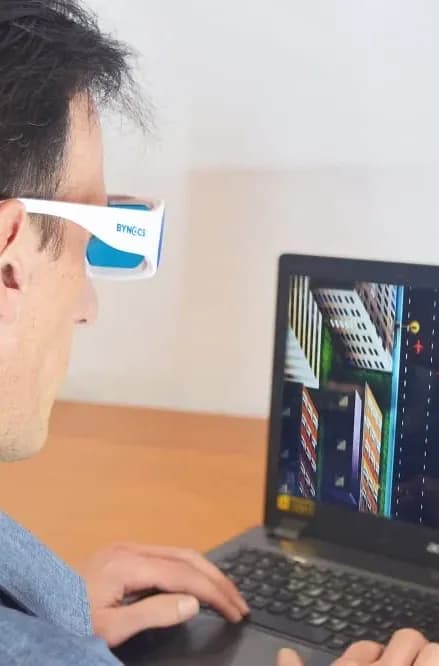
BYNOCS SquintEase is a binocular neuroplasticity-based digital vision therapy program designed especially for intermittent exotropia.
Key Focus Areas
-
Eliminating suppression
-
Strengthening sensory and motor fusion
-
Improving fusional convergence
-
Maintaining long-term control of eye deviation
Key Features
-
Non-invasive & non-surgical: This is a therapy program, not surgery. The therapy includes gamified digital exercises along with specialized eyewear that engages both eyes simultaneously.
-
Engaging and game-like: It is designed to be interactive in nature, thereby promoting compliance, particularly in children.
-
AI and cloud-based: Personalized based on real-time performance and progress.
-
Professional oversight: Sessions can be guided by trained eye care professionals with remote or in-clinic support.
Who It’s For
-
Intermittent squint in children and adults: Helps in retraining binocular vision across age groups.
-
Patients requesting alternative or complementary therapy: This may avoid surgery for the majority of patients; however, individual assessment by a clinician is crucial.
Treatment Pathway (Typical)
Step-by-Step Guide
Evaluation:
Clinical or online assessment to tailor the therapy.
Personalized SquintEase Sessions:
Daily structured digital therapy.
Monitoring:
Progress tracked by professionals and adjusted as needed.
In other words, BYNOCS SquintEase is a modern, digitized vision therapy program for improving eye alignment and binocular vision using play-based, personalized exercises that reduce symptoms of intermittent squint and improve visual function without invasive procedures.